
Countries Where Social Media Is Blocked
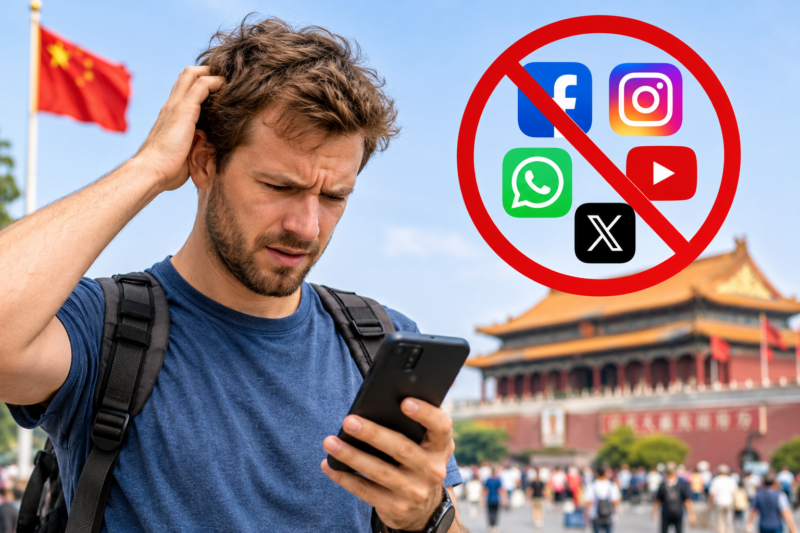 Visiting a foreign country is an opportunity to discover new things and experience different traditions and customs. However, even everyday activities, such as posting a photo on Instagram or sending a WhatsApp message, can become surprisingly complicated in certain countries.
Countries With Internet Restrictions That Affect Several Platforms
Some governments impose severe restrictions on popular applications and platforms, making life harder for tourists.
China, for example, is one of the countries with the strictest social media restrictions. Facebook, Instagram, WhatsApp, YouTube, and X are typically blocked there and instead, Chinese residents use local alternatives such as WeChat, Weibo, and Douyin – the Chinese version of TikTok.
Similarly, Iran imposes severe restrictions on social media and internet access. Instagram, Facebook, TikTok, and X have been blocked for quite some time. And while WhatsApp restrictions have changed recently, interruptions may still occur due to internet disruptions.
Social Media Restrictions in Russia and North Korea
Russia is another destination where travellers might face difficulties online. Facebook and Instagram have been blocked since 2022, and YouTube and several messaging applications have faced restrictions as well.
North Korea has even stricter limitations, as most residents of this country cannot access the global internet, and travellers shouldn’t expect normal access to their favourite apps.
These restrictions can make it difficult for visitors to use their usual applications, so it’s important to check which apps and services are available before travelling.
Countries With Limited Social Media Restrictions
There are several other countries where internet access is restricted, but not all social media platforms are banned. Certain applications or features are prohibited by the government.
For instance, India banned TikTok in 2020, along with several other Chinese applications. However, travellers can use Instagram, Facebook, WhatsApp, and YouTube without similar restrictions.
The United Arab Emirates is another interesting example, as popular social media platforms are available to visitors. Travellers can send messages using WhatsApp, but voice and video calls are restricted.
Turkey and Pakistan have experienced temporary bans on several social media websites due to political events; however, these websites aren’t typically permanently banned.
Social Media Restrictions: Problems for Travellers
Being unable to use popular social media websites can be problematic for travellers, who might find themselves unable to text their friends or family via their usual choice of messaging apps.
It may also be impossible to use certain websites to get the latest travel-related information, such as X, where people can post live updates on certain events. The inability to use social media can also cause problems for those who use these applications for work.
That’s why before visiting any country, it’s important to review the latest travel advice to learn more about local restrictions, including access to the internet.
Preparing to Travel
If you’re planning on visiting a country where some social media platforms or websites are banned, it’s highly recommended to prepare for your trip in advance and get your smartphone ready.
First of all, it’s important to check which apps work in the country and arrange ways to contact your family. It’s also advisable to pre-download any information that might be necessary during your travels so you don’t only depend on internet access to get around.
Some travellers also look for ways to still access their usual online services while abroad. A free VPN trial for iPhone, for example, may help them access services from their home country. However, it’s important to check local laws, as VPN use can sometimes be restricted or prohibited.
Other Solutions to the Problem
Using these services isn’t always possible, as certain countries ban them or their use may violate local laws. Furthermore, they can’t restore access if there’s a complete interruption of internet connectivity.
Therefore, another useful measure is arranging international roaming or purchasing a local SIM card. Nevertheless, mobile networks may follow the same restrictions, so having internet access doesn’t mean that it’s possible to use all apps.
The final step before the trip is to agree on alternative ways of communicating with friends or family.
Why Internet Restrictions Might Change Suddenly
It’s important to remember that internet restrictions are unpredictable, as governments might block several apps or websites for a certain period due to elections or protests.
Sometimes these bans affect only particular websites or platforms, but sometimes internet access is interrupted across an entire region.
These measures can cause problems for travellers who depend on social media to get updates about their trip or communicate with relatives, which is why it’s advisable to look through the internet freedom information when researching a destination.
It’s also important to remember that restrictions may vary depending on the location or mobile network used, so travellers might face problems despite having internet access.
Conclusion
Restrictions on the use of social media websites shouldn’t discourage travellers. However, information about these restrictions might come in handy during the trip.
Before travelling, it’s important to learn about internet restrictions and prepare alternative means of communication if necessary.
Article by Leo Corado.

