
Hilton Quang Hanh Onsen Resort
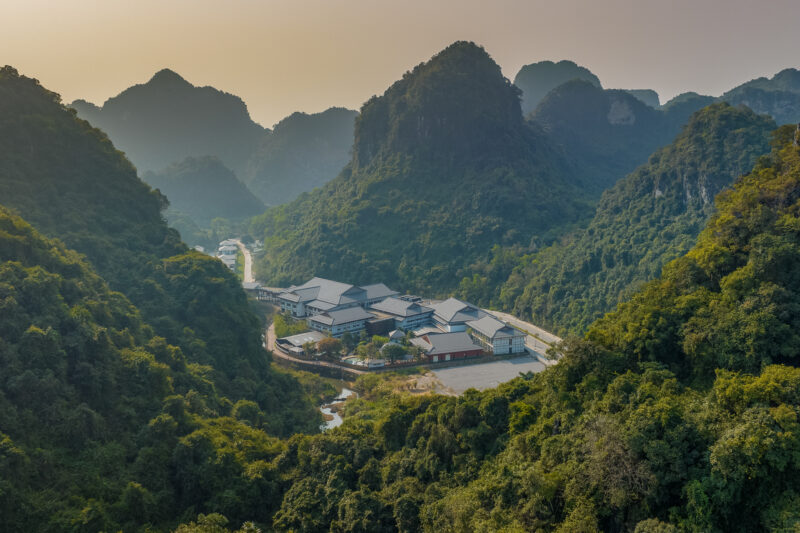
Northern Vietnam is best known to international travellers for the dramatic limestone scenery of Ha Long Bay, but the wider Quang Ninh region has considerably more to offer. One of its more unusual attractions is found at Quang Hanh, an area long associated with natural hot mineral springs. Since opening in February 2026, Hilton Quang Hanh Onsen Resort has brought a new style of accommodation to the region, combining Japanese onsen traditions with the facilities of a modern international resort. It is also Hilton’s first onsen resort in Southeast Asia.
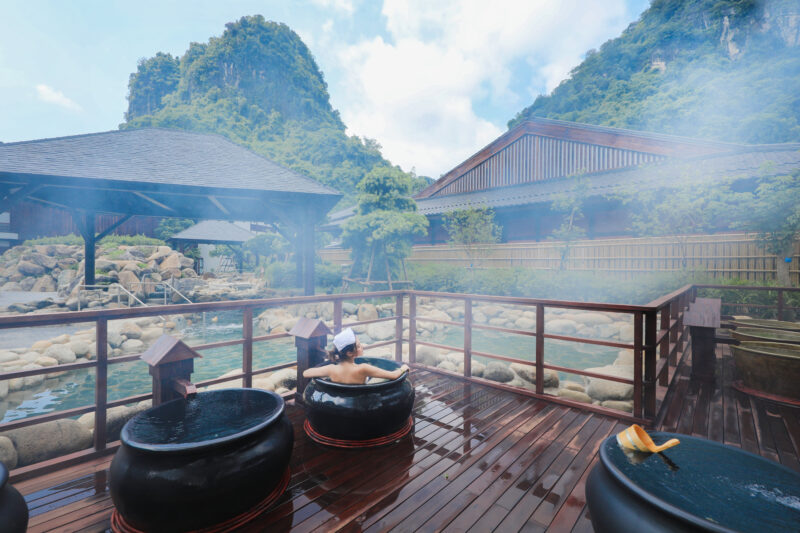
The resort sits in the Quang Hanh valley in Cam Pha, surrounded by green mountains and a landscape that feels far removed from the pace of Hanoi. Despite the peaceful setting, it is reasonably accessible for travellers exploring northern Vietnam. Ha Long is around 30 minutes away by car, while the journey from Hanoi takes approximately two and a half hours. Attractions such as Long Tien Pagoda, Bao Hai Linh Thong Pagoda and the caves around Ha Long Bay can therefore be combined with a stay here.
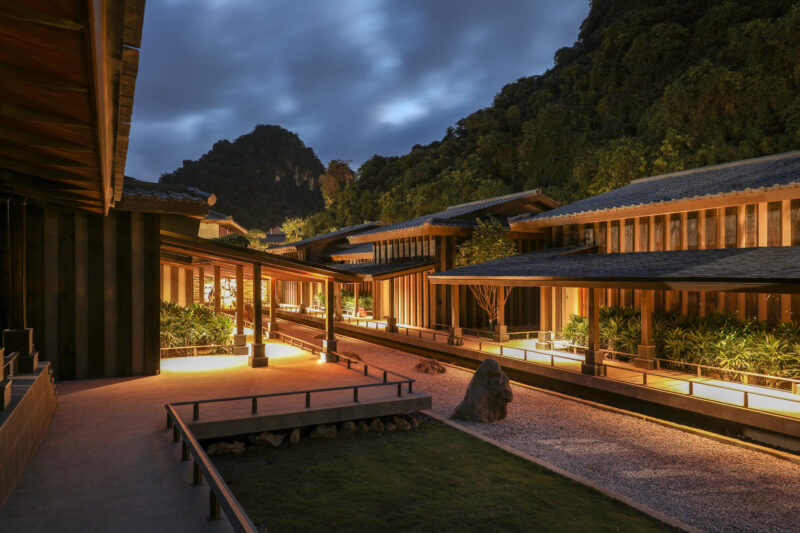
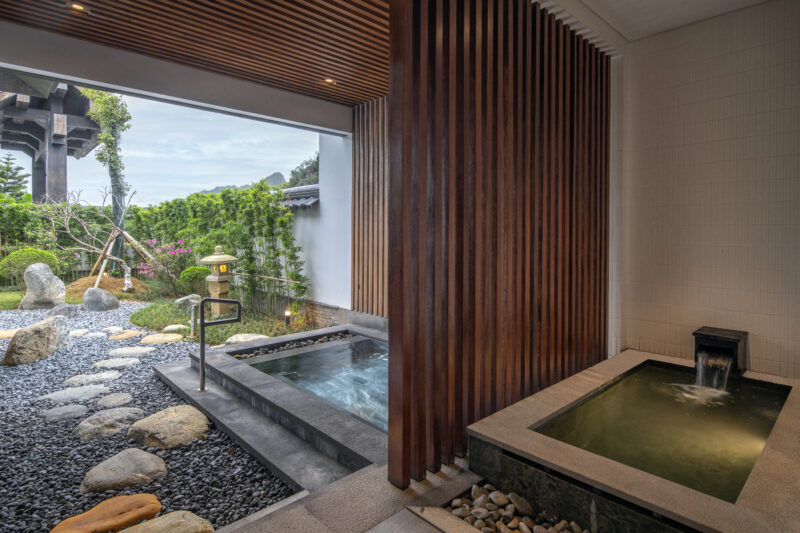
What makes Hilton Quang Hanh Onsen Resort particularly interesting is that the hot springs are not simply an additional spa facility. They are central to the identity of the property. Every guest room and villa includes a private onsen, allowing guests to experience the mineral-rich Quang Hanh water without leaving their accommodation. The water comes from natural salt-mineral hot springs in the area, while the overall design draws heavily on Japanese ideas of bathing, simplicity and relaxation.
The accommodation is extensive, with 38 rooms and a planned collection of 178 villas. Options range from rooms and suites suitable for couples to large villas designed for families and groups. The two-, three- and four-bedroom villas range from around 110 to 550 square metres and include generous living and dining spaces. At the top end are two Presidential Villas measuring approximately 1,250 square metres, each with five bedrooms as well as features including a private teppanyaki area, karaoke room and wine cellar.
Guests who want to explore the full onsen experience also have access to Yoko Onsen Quang Hanh. The bathing complex includes numerous indoor and outdoor mineral baths, with areas for male, female and mixed bathing, as well as sauna facilities. Hilton describes the wider experience as offering more than 40 indoor and outdoor baths. For travellers unfamiliar with Japanese bathing culture, it is an interesting introduction to a tradition that is still relatively uncommon at resorts in Southeast Asia.
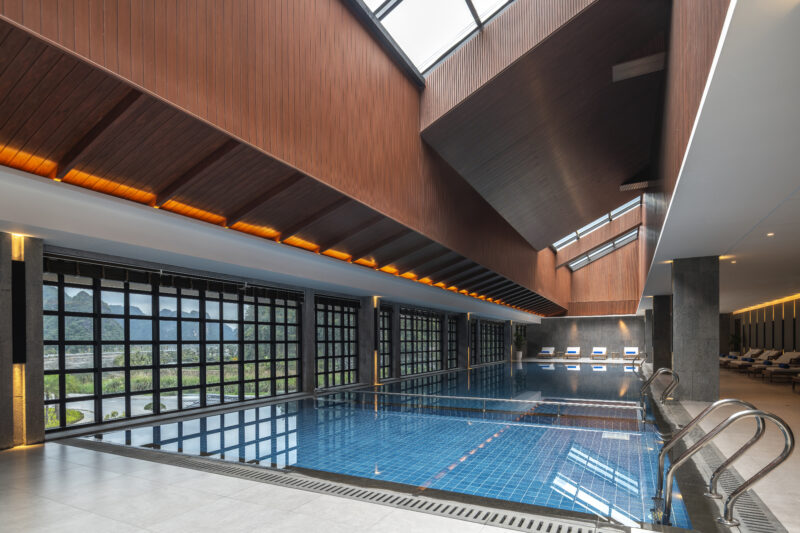
Wellness extends beyond the mineral baths. The resort has an Eforea Spa offering treatments including massage, aromatherapy, reflexology and facials. There is also an indoor swimming pool overlooking the surrounding mountain scenery, along with a 24-hour fitness centre. Families have not been forgotten either: a Kids’ Club and playground give younger guests their own spaces, making the resort more practical for parents who want a wellness-focused break without choosing an adults-only property.
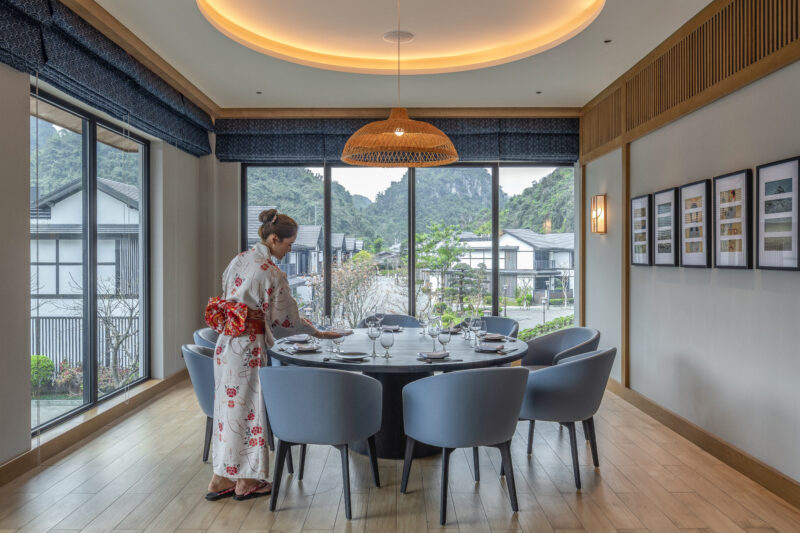
Dining follows the Japanese influence found elsewhere around the resort. Genji is the main Japanese restaurant, with sushi and teppanyaki counters as well as a kaiseki menu. Genji Bar takes a more relaxed approach, serving afternoon tea, cocktails and light dishes alongside panoramic views. The resort is also developing its broader food offering through Kitchen Craft, an all-day dining venue covering Western and Asian dishes.
The location makes it tempting to treat Hilton Quang Hanh Onsen Resort as an addition to a Ha Long Bay itinerary rather than a destination on its own, but staying for a couple of nights allows more time to appreciate what makes the property different. A day spent cruising among Ha Long Bay’s limestone islands can be followed by an evening soaking in a private mineral bath, while another day can be devoted entirely to the onsen, spa and resort facilities.
Hilton Quang Hanh Onsen Resort adds something genuinely distinctive to northern Vietnam’s hotel scene. Rather than relying solely on grand architecture or conventional resort facilities, it builds the guest experience around something closely connected to its location: Quang Hanh’s natural hot mineral water. For travellers looking to combine Ha Long Bay with a slower and more restorative side of Quang Ninh, it offers an appealing reason to spend more time in this part of Vietnam.
Photos provided by the hotel.

