
The Most Dangerous Countries to Drive In
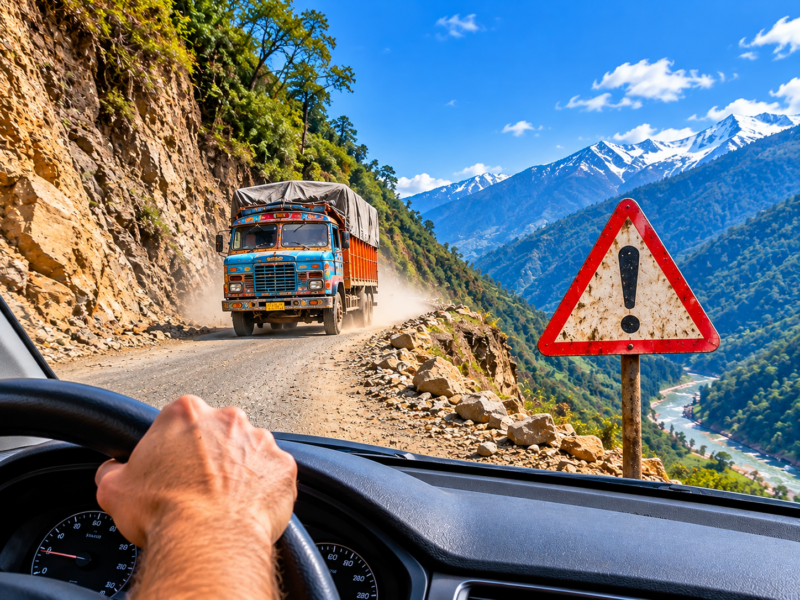 Among 25 popular destinations for American travelers, the Dominican Republic and Thailand have the highest road death rates. The World Health Organization puts the Dominican Republic at 27.4 deaths per 100,000 people and Thailand at 25.4. The US rate is 14.2, so both are close to double.
At the other end, the UK (2.4), Japan (2.7) and Ireland (2.8) have some of the lowest rates in the world.
The gap matters for anyone planning a trip. From 2019 to 2021, over 1,500 US citizens died from non-natural causes in foreign countries. Motor vehicle crashes were the leading cause, at 26%, according to the CDC Yellow Book.
The 5 most dangerous countries to drive in, by road death rate
Out of the 25 destinations in the full ranking below, these have the highest road death rates:
- Dominican Republic: 27.4 deaths per 100,000. In WHO data, 71% of reported road deaths were riders of motorcycles and other powered two- and three-wheelers.
- Thailand: 25.4. WHO counted 18,218 road deaths in Thailand in 2021, and motorcyclists made up 83.8% of them.
- Morocco: 18.6.
- Jamaica: 17.8. Traffic in Jamaica drives on the left.
- Vietnam: 17.7. WHO lists Vietnam’s legal blood alcohol limit as zero.
The 5 countries with the lowest road death rates
- United Kingdom: 2.4
- Japan: 2.7
- Ireland: 2.8
- Germany: 3.3
- Spain: 3.5
Which countries have the most car accidents? 25 destinations ranked by road deaths
The table ranks each destination by its road death rate. The last column compares it with the US. A figure of 0.5x means half the US rate, and 1.9x means nearly double.
The rates are 2021 estimates from the WHO Global Status Report on Road Safety 2023. They count deaths, not every crash, and they cover each country’s whole population, not just tourists. Treat them as a guide to local road conditions, not as anyone’s personal odds.
| Rank | Destination | Road deaths per 100,000 (2021) | Compared with US |
|---|---|---|---|
| 1 | Dominican Republic | 27.4 | 1.9x |
| 2 | Thailand | 25.4 | 1.8x |
| 3 | Morocco | 18.6 | 1.3x |
| 4 | Jamaica | 17.8 | 1.3x |
| 5 | Vietnam | 17.7 | 1.2x |
| 6 | Bahamas | 16.2 | 1.1x |
| 7 | Colombia | 16.2 | 1.1x |
| 8 | Costa Rica | 15.5 | 1.1x |
| 9 | India | 15.4 | 1.1x |
| n/a | United States | 14.2 | baseline |
| 10 | Peru | 12.7 | 0.9x |
| 11 | Mexico | 12.0 | 0.8x |
| 12 | Indonesia (incl. Bali) | 11.3 | 0.8x |
| 13 | Philippines | 9.7 | 0.7x |
| 14 | Egypt | 9.4 | 0.7x |
| 15 | Greece | 7.3 | 0.5x |
| 16 | Portugal | 7.2 | 0.5x |
| 17 | Turkey | 6.5 | 0.5x |
| 18 | Italy | 5.0 | 0.4x |
| 19 | Canada | 4.7 | 0.3x |
| 20 | France | 4.7 | 0.3x |
| 21 | Spain | 3.5 | 0.2x |
| 22 | Germany | 3.3 | 0.2x |
| 23 | Ireland | 2.8 | 0.2x |
| 24 | Japan | 2.7 | 0.2x |
| 25 | United Kingdom | 2.4 | 0.2x |
A low rate doesn’t always mean low numbers. Mexico’s rate is below the US rate, yet it accounted for 141 of the 402 road deaths of US citizens abroad from 2019 to 2021, or 35%, according to the CDC. Volume explains most of it. Of the 107.7 million US outbound travelers in 2024, 39.9 million went to Mexico, according to the National Travel and Tourism Office.
Two wheels, not bad drivers, drive the worst numbers
People love to argue about which country has the worst drivers in the world. The death rates point somewhere else. In the countries at the top of the ranking, a large share of road deaths involve motorcycles and scooters.
In WHO data, riders of motorcycles and other powered two- and three-wheelers made up 80% of reported road deaths in Indonesia, 71% in the Dominican Republic and 60% in Colombia. The CDC found that 19% of the 402 US citizen road deaths abroad from 2019 to 2021 involved motorcycles.
Renting a scooter is a normal way to get around Bali, Thailand and the Greek islands. A study at a hospital in Chonburi, Thailand, looked at 720 international travelers treated for road injuries from 2015 to 2019. Of those, 79.2% were driving motorized two- or three-wheelers, 58.6% were driving at night and 13.2% had been drinking.
WHO says correct helmet use can reduce the risk of death in a crash by more than 6 times.
Some of the most dangerous roads in the world
Country averages don’t capture single roads with a reputation of their own. Two that draw travelers:
- North Yungas Road, Bolivia: Nicknamed “Death Road,” this narrow mountain route is now better known for downhill mountain bike tours than for regular traffic.
- Skippers Road, New Zealand: Completed in 1890 and still single lane, according to Heritage New Zealand.
The US has its own example. The Dalton Highway in Alaska runs 414 miles, mostly on gravel, and was built for the trans-Alaska oil pipeline.
Hardest countries to drive in as a tourist
Low-ranked countries can still be hard to drive in. A few things trip up American visitors:
- Driving on the left: the UK, Ireland, Jamaica and the Bahamas all drive on the left.
- Lower blood alcohol limits: WHO lists the US limit as 0.08. Spain, Italy, France, Greece and Ireland use 0.05, as does Scotland. Japan uses 0.03 and Vietnam zero. Utah was the first US state to adopt 0.05. Limits change, so check local rules before you go.
- Unfamiliar vehicles: if you’ve never ridden a scooter at home, a busy foreign road is a hard place to start.
Taxis, rideshares and the back seat
Plenty of travelers buckle up behind the wheel and skip it in the back of a cab. In 2024, nearly 60% of back seat passengers killed in a crash in the US were unbuckled, based on known seat belt use, according to NHTSA. WHO says wearing a seat belt can reduce the risk of death among vehicle occupants by up to 50%.
Rideshare apps show a named driver, a plate number and a tracked route. A few habits take seconds:
- Match the plate and the driver’s name before you get in.
- Use the seat belt in every seat.
- Where apps don’t operate, ask your hotel about licensed taxis.
- Share your trip with someone if the app allows it.
The trip doesn’t end when the plane lands. For many travelers the last leg is an Uber or Lyft home from the airport. If something goes wrong on that ride, this guide on what to do after a rideshare accident walks through the first steps. Rules and deadlines vary by state.
If you’re in a car accident abroad
According to Medicare, it usually doesn’t cover health care while you’re traveling outside the US, but there are some exceptions. Many private plans also limit coverage abroad, so it’s worth calling yours before you go.
Getting home can be expensive too. The CDC Yellow Book puts medical evacuation costs at USD 25,000 for transport within North America and over USD 250,000 for more distant and remote locations.
In Mexico, you can call 078 for the Angeles Verdes, or “Green Angels,” a roadside assistance service run by the government.
A quick check before you book
- Find your destination in the ranking above and see how it compares with the US.
- Check which side of the road they drive on and the local alcohol limit.
- Decide in advance whether you’ll ride a scooter, and plan for a proper helmet if you will.
- Ask your health plan what it covers abroad and whether you need evacuation coverage.
- Save the local emergency number.
- Buckle up in every seat, including taxis and rideshares.
Road conditions vary a lot from country to country. A look at the numbers before you go makes it easier to decide how you’ll get around.
Article by Bibi Lauri Raven.

