
The Sneaky Travel Fees I Stopped Paying
By Brian Murphy.
Most travel costs are easy to see. Flights, hotels and meals out all come with a clear price that you can weigh up before you pay. The costs that do the real damage are harder to spot. They are tucked into exchange rates, buried in booking screens, or added at the moment you are tired, rushed and keen to get on with your holiday.
For years, I paid these charges without a second thought. Each one seemed too small to matter. Then I sat down with twelve months of bank statements and added them all up. The total was enough to pay for a long weekend away. This article walks through the fees I found, the changes I made, and how much money I kept as a result.
Why Small Fees Add Up So Fast
A single charge of £2, or 3%, never feels like a problem. Spread across a year of trips, it tells a very different story.
The trouble with percentages
Percentage fees grow with your spending, so the bigger the trip, the bigger the bite. They are also easy to overlook. A 3% charge on a £40 dinner comes to £1.20, which nobody notices. The same 3% on £3,000 of holiday spending comes to £90, and that money disappears with nothing to show for it. On the day you pay them, fees like these barely register. Their true cost only becomes clear when you add them together.
Fees at the Card Machine
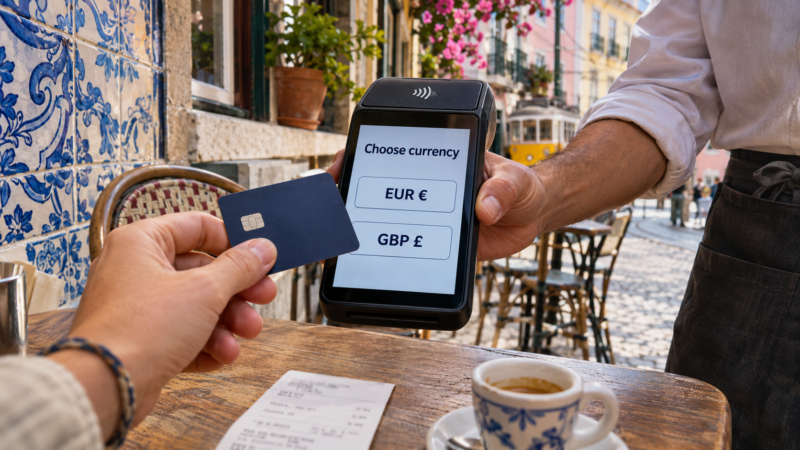
My first clue came from a restaurant bill in Lisbon. The amount on my statement was higher than the prices on the menu, and I couldn’t work out why.
Dynamic currency conversion
The answer turned out to be a question I had been answering wrongly for years. Card machines abroad often ask whether you would like to pay in your home currency or the local one. Paying in pounds sounds like the safer choice, but it rarely is. When you choose your home currency, the shop’s payment provider sets the exchange rate, and that rate usually includes a hefty markup. I now always choose the local currency and let my own card provider handle the conversion. The same rule applies to cash machines that offer to “lock in” your exchange rate. After comparing a few of those offers with the European Central Bank’s daily reference rates, I could see just how poor they were.
Foreign transaction fees on everyday cards
Choosing the local currency fixed one problem, but it exposed another. My regular debit card added a fee of almost 3% to every purchase I made abroad. Over the year, that single charge cost me more than any other fee I found. I switched to a card that charges no foreign transaction fee and uses an exchange rate close to the market rate. Setting it up took twenty minutes. I only wish I had done it ten years earlier.
Cash Withdrawals Abroad
Cards now cover most of my spending, but some places still run on cash. Small guesthouses, village tavernas and local markets often prefer notes, and in some places taxis still do too.
The double hit at the ATM
Taking out cash abroad can cost you twice. Your bank may charge a fee for using a foreign machine, and the machine’s owner may add a charge of their own. Standalone cash machines in airports and busy tourist streets tend to be the worst offenders. These days, I withdraw larger amounts less often, using machines that belong to established local banks, and I check the screen for any operator fee before confirming. If a machine wants to charge me, I cancel the transaction and find another. There is rarely one far away.
Booking and Transport Extras
With my cards and cash sorted, I turned to the way I booked things. Many travel prices start low and then climb, one extra at a time, as you click through to the checkout.
Flight add-ons
Budget airline fares look cheap until you add a bag, a seat and priority boarding. I used to tick those boxes out of habit. Now, on short trips, I pack light enough to fit the free under-seat allowance, and I skip paid seat selection unless I am travelling with someone I need to sit beside. On longer trips, I compare the total price with a full-service airline, because the gap often narrows once luggage is included.
Car hire excess cover
The car hire desk was where I lost the most in a single transaction. Staff often encourage you to buy their own cover to reduce the excess you would pay if the car were damaged, and it can cost more per day than the rental itself. I now buy a standalone annual excess policy before I travel. It covers every rental I make during the year and costs less than a single week of the desk’s cover used to.
Staying Connected
Phone bills were the final surprise. Since Brexit, several UK networks have reintroduced daily charges for using your phone in Europe, and those charges quietly mount up over a two-week stay. The rules vary depending on where your contract is based, so if you are on an EU network, the EU’s guidance on roaming charges is worth reading before you go. My solution was simple: I now buy a local eSIM before I leave, which gives me plenty of data for a fraction of the daily roaming rate.
Why Good Financial Advice Matters Here
Tackling each fee one at a time worked, but it took me years of trial and error. Better advice would have caught most of these problems much sooner. Travel money sits awkwardly between everyday banking and holiday planning, so it often falls through the gaps. Few people review their cards before a trip, and even fewer look back afterwards to see what each trip really cost.
This is where good guidance proves its worth. A sensible adviser, or a well-designed tool, looks at your actual spending rather than offering general tips. It can flag that your main card charges a foreign transaction fee, point out that you withdraw cash too often in small amounts, or show that your travel spending has been creeping up year after year. I have found that tools offering AI financial planning are particularly good at this kind of pattern-spotting, because they can sort through months of transactions in seconds and highlight charges that a quick glance would miss.
What I Saved in a Year
Once all the changes were in place, I compared a year of travel spending before and after. I took roughly the same number of trips, to similar destinations, on similar budgets. Here is where the savings came from:
- Foreign transaction fees on my everyday card: £94
- Dynamic currency conversion at shops and restaurants: £38
- ATM fees from foreign and standalone machines: £61
- Car hire excess cover bought at the rental desk: £140
- Flight extras I no longer needed: £75
- Mobile roaming charges: £48
Altogether, that comes to about £456. None of it meant travelling less or staying anywhere worse. The trips themselves stayed the same. Only the waste disappeared.
Final Thoughts
Hidden travel fees rarely announce themselves. They appear as small, easily ignored amounts that feel like an unavoidable part of being away. Taken together, though, they add up to real money that could go towards another trip, a nicer room or a healthier savings balance.
The lesson I have taken from all this is a simple one. How you pay matters just as much as what you pay for. Review your statements, question the charges that have become routine, and seek guidance where it helps. The savings build steadily over time, and they make the effort well worth it.

